Common Challenges in Checking cargo condition before container loading
Pre-loading checks connect container suitability, package condition, handling, restraint, quantity, and final seal records. A defined stop-work route helps the buyer address material exceptions before cargo leaves the warehouse.
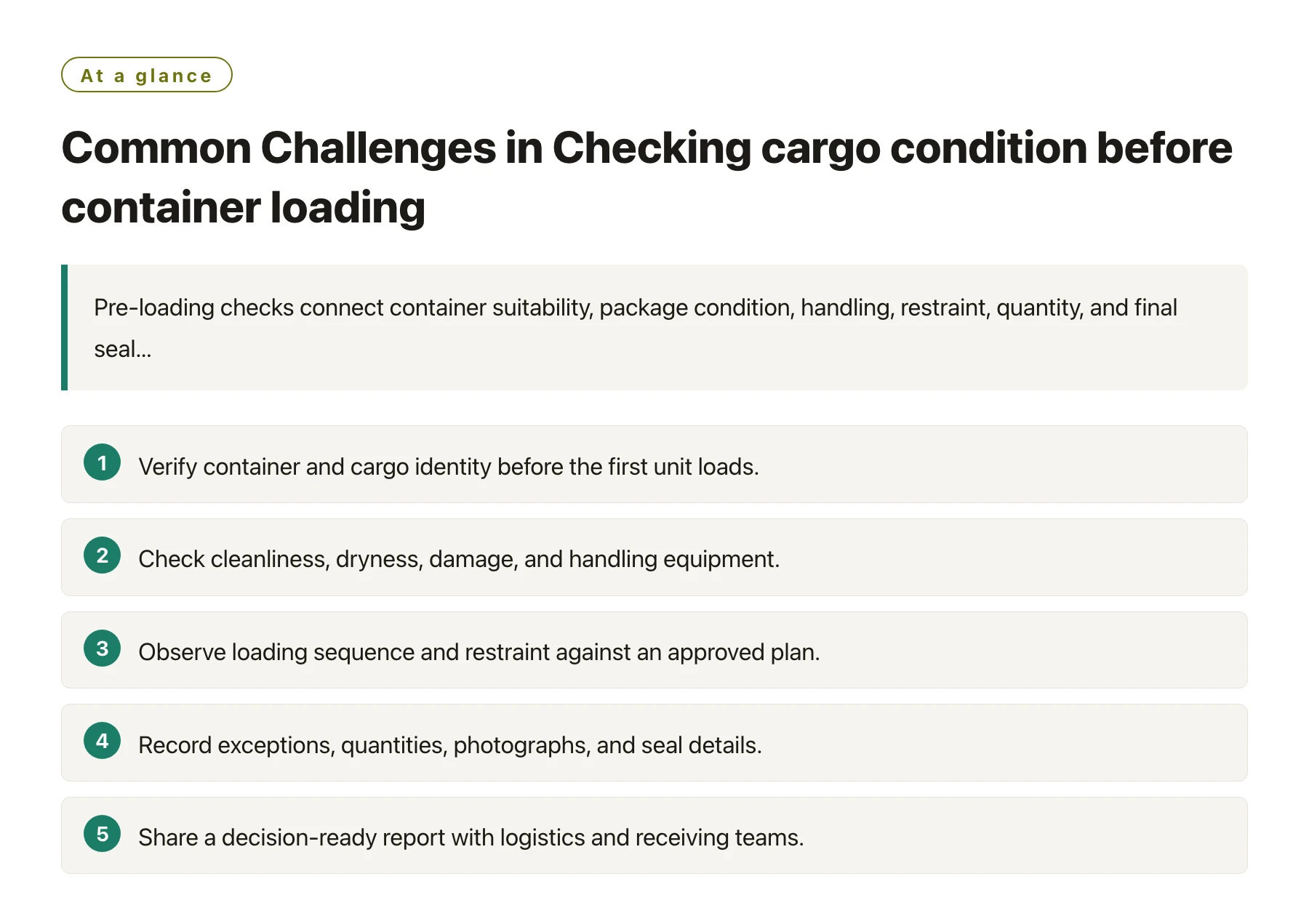
Key takeaways
- Verify container and cargo identity before the first unit loads.
- Check cleanliness, dryness, damage, and handling equipment.
- Observe loading sequence and restraint against an approved plan.
- Record exceptions, quantities, photographs, and seal details.
- Share a decision-ready report with logistics and receiving teams.
A loading record is most useful when it shows what was checked, what changed, and which evidence supports the final seal decision.
1. Define what condition must be checked
A container loading supervision assignment should begin with a written checklist, not an assumption that a container is acceptable if it looks clean. Define the goods, package condition, loading sequence, handling limits, moisture concerns, seal process, photographs, and stop-work triggers. State whether the supervisor checks only visible condition or also verifies equipment details and records.
Identify who can approve loading to begin, who can stop work, and who makes a decision if cargo, packaging, or container condition differs from the plan. Share contact details and escalation steps before the truck arrives. Clear authority prevents a time-pressured loading crew from treating an unresolved issue as accepted.
2. Inspect the container before loading
Confirm container number against booking or dispatch records. Check interior dryness, odor, cleanliness, holes, damage, floor condition, doors, locks, seals, and signs of contamination or water ingress. Assess whether visible defects could affect the packages or ability to close and seal the unit safely.
Use consistent photos of the exterior identification, interior walls, floor, ceiling, doors, and any defect. Record location and approximate extent. If a container is unsuitable, pause and request replacement or written disposition from the authorized buyer rather than attempting an undocumented workaround.
3. Check equipment and cargo identity
Verify that the loading equipment is suitable for the cargo weight and shape, and that operators have clear access and handling instructions. Confirm forklift tines, slings, clamps, ramps, and protective materials will not crush, scratch, puncture, or deform the packages.
Match cartons, bundles, crates, or pallets to the order and packing list. Check model, variant, lot, count, and package condition before the first unit enters the container. Separate damaged, wet, open, or unidentified packages and record their disposition so they cannot be mixed into the shipment unnoticed.
4. Plan the loading pattern and weight distribution
Use an approved load plan to set sequence, orientation, stack height, dunnage, weight distribution, and access to restraint points. Heavy items should not be concentrated in a way that creates an unsafe imbalance or damages lighter packages. Follow cargo and container limits and confirm actual weights from reliable records.
The IMO/ILO/UNECE CTU Code provides non-mandatory guidance for handling and packing cargo transport units across sea and land transport. Use it alongside applicable mode-specific rules, carrier instructions, and the shipment’s approved plan; it is not a substitute for those requirements. [1]
5. Observe handling and restraint as work proceeds
Watch the loading sequence from first package to final restraint. Confirm loads are placed without uncontrolled drops, dragged surfaces, excessive impact, or unsupported overhang. Check blocking, bracing, lashing, and dunnage against the agreed plan and the cargo’s characteristics.
Photograph representative layers and restraint before they are hidden by later loads. Record any departure, additional material, or change in order. If the crew changes the plan because of a space or equipment issue, ask the responsible party to approve the new arrangement and document why it is suitable.
6. Check moisture and cleanliness risks
Inspect for wet packaging, condensation, standing water, leaking goods, or materials that could introduce moisture or contaminate adjacent cargo. Confirm any moisture-control materials are dry, correctly placed, and compatible with the goods. Note weather during loading if it affects packaging exposure.
A clean, dry appearance at loading does not guarantee the cargo will remain dry in transit. Verify that packaging, barrier, desiccant, ventilation, and route assumptions match the product and shipment duration. Escalate exposed or moisture-sensitive products to the buyer’s quality owner for a decision before closure.
7. Reconcile quantities and package records
Maintain a running count by package identifier as units are loaded. Reconcile the final count to the packing list and order, including partial pallets, spare parts, samples, and approved replacements. Record any shortage, surplus, or package moved to another shipment.
Capture seal number, container number, loading start and finish time, loading crew or responsible contact, and relevant photographs. Where a weight record is required, identify its source and whether it includes pallets, dunnage, and restraint. Ensure the final records are shared with the freight and receiving teams.
8. Handle exceptions and stop-work decisions
Define conditions that require pausing work: damaged container, wet or crushed goods, unsafe handling, unidentified product, count mismatch, missing restraint, or a material departure from the approved plan. Contact the named buyer representative and provide evidence before resuming.
Record every exception with time, location, affected package or area, immediate containment, decision owner, approved disposition, and remaining risk. A verbal instruction may be confirmed in writing, but it should not replace the required approval. Do not sign a clean loading report if a material issue remains unresolved.
9. Close the load and seal traceably
Before doors close, photograph the complete stow and restraint, final load face, and any required package identifiers. Confirm that nothing blocks the doors or creates a risk during opening. Close and lock the doors using the agreed method and record the seal number against the container number.
After sealing, capture seal placement and verify the recorded number with a second check where practical. Send the loading report and photos promptly to the buyer. If the seal is broken or the container is reopened, document the reason, authorization, new seal, and complete repeat check.
10. Use the report to strengthen future loads
A useful report records scope, container identity, condition, cargo quantity, loading method, restraint, moisture observations, exceptions, seal, time, contacts, and limits. Separate direct observations from statements made by the warehouse. Keep original photographs and connect them to report sections.
Buyers engaging JS Sourcing can use a standard checklist to coordinate container inspection, cargo condition, loading sequence, and seal documentation. Review recurring issues by product, warehouse, and packaging type, then update the packing plan and training before the next shipment.
Sources
Frequently asked questions
What should be checked before a container is loaded?
Verify the container identity, dryness, cleanliness, visible damage, doors, locks, floor, cargo identity, package condition, and loading plan.
Who should approve a change to the load plan?
The named buyer or authorized logistics owner should review material changes and record the reason and disposition before loading continues.
Should loading be stopped for damaged packages?
Pause the affected goods, record evidence, isolate them, and request a documented decision about repair, replacement, or shipment.
What details belong in a container loading report?
Record container and seal numbers, quantities, condition, sequence, restraint, exceptions, timing, contacts, photographs, and inspection limits.